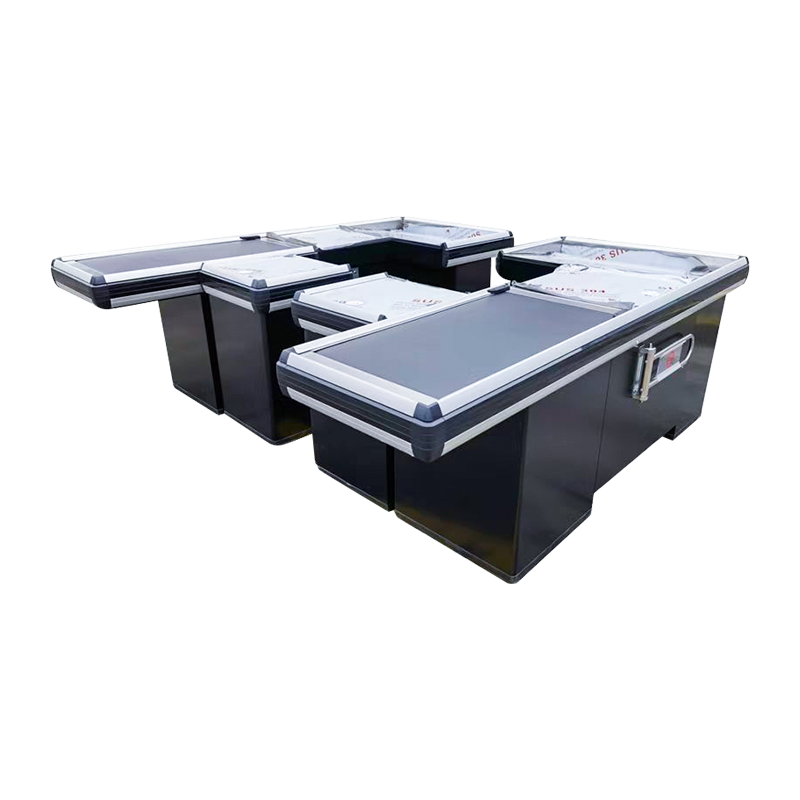

Why Checkout Counter Design Directly Impacts Store Performance
The checkout counter is the final touchpoint in every retail transaction, and its design has a measurable impact on throughput speed, staff ergonomics, customer satisfaction, and overall store profitability. A poorly designed checkout station creates bottlenecks during peak hours, increases cashier fatigue, and leaves customers with a negative last impression regardless of how positive their in-store experience was up to that point. Investing in the right checkout infrastructure — whether a conveyor belt checkout counter for high-volume grocery operations or a stainless steel checkout counter for hygiene-critical environments — is a strategic decision that pays dividends across the entire store operation.
Modern retail checkout equipment has evolved significantly beyond the basic fixed counter. Today's solutions integrate motorized conveyor systems, flexible mobility mechanisms, durable material construction, and ergonomic layouts that simultaneously serve cashier efficiency and customer convenience. Understanding the specific capabilities of each counter type — and matching them to the store's operational profile — is the foundation of a well-functioning front-end layout.
How Conveyor Belt Checkout Counters Accelerate Transaction Speed
Conveyor belt checkout counters are the operational backbone of supermarkets, hypermarkets, and large-format grocery retailers worldwide. The motorized belt system allows customers to unload their entire basket or trolley onto the conveyor at the start of the lane, freeing them to begin bagging or payment preparation while the cashier processes items sequentially. This parallel activity — customer unloading while cashier scanning — is the key mechanism by which conveyor belt systems achieve significantly higher transaction throughput than flat-surface counters.
In a high-volume grocery environment, the difference between a well-specified conveyor belt checkout counter and an undersized or poorly maintained one is directly visible in queue length and customer wait time. Belt speed, belt width, counter length, and the placement of the divider bar all affect how smoothly items flow from the customer loading zone to the cashier scanning position. Standard belt widths range from 350mm to 500mm, with wider belts accommodating large or irregularly shaped items more reliably. Belt speed is typically adjustable between 0.1 and 0.5 meters per second, allowing cashiers to match item flow to their scanning pace.
Conveyor Belt System Components and Their Functions
- Main conveyor belt — The primary belt carries customer items from the loading end to the cashier position. High-quality belts use PVC or polyurethane construction with textured surfaces to prevent item slippage, particularly important for round or cylindrical products.
- Customer divider bar — A sliding separator bar allows customers to demarcate their items from the next customer's purchases. Automatic divider return systems, which push the bar back toward the customer end after each transaction, reduce cashier handling time and keep the lane flowing continuously.
- End stop and sensor system — An automatic stop sensor at the cashier end halts belt movement when items reach the scanning position, preventing items from piling up or falling off the counter edge. This system also reduces motor wear by running the belt only when needed.
- Bagging area — The section of the counter beyond the cashier position provides space for scanned items to be collected into bags. Gravity-feed bag holders, integrated weighing platforms for produce, and adjustable-height surfaces are common features that improve cashier workflow efficiency.
- POS equipment mounting — Integrated cable management channels, monitor arms, and equipment mounting rails keep the POS terminal, barcode scanner, receipt printer, and payment terminal organized and within ergonomic reach of the cashier without cluttering the counter surface.
Stainless Steel Checkout Counter: Durability and Hygiene Combined
The stainless steel checkout counter represents a premium tier of retail checkout equipment designed for environments where hygiene, durability, and long-term appearance retention are non-negotiable requirements. While laminate and MDF-based counters are adequate for general retail, stainless steel construction is the specified standard in supermarkets with fresh food service counters, pharmacy-adjacent checkouts, food hall environments, and any retail setting subject to rigorous cleaning protocols with chemical disinfectants.
Grade 304 stainless steel — the most widely specified grade for retail checkout counters — provides excellent resistance to corrosion, staining, and the cleaning agents used in food retail environments, including chlorine-based sanitizers and alcohol solutions. Its non-porous surface prevents bacterial accumulation in surface micro-cracks, a significant advantage over materials with textured or sealed surfaces that can harbor contaminants over time. Grade 316 stainless steel, with its additional molybdenum content, is specified in coastal locations or environments with higher chloride exposure where superior corrosion resistance is required.
Structural and Finish Specifications
Stainless steel checkout counters are typically constructed from 1.2mm to 2.0mm sheet steel, with heavier gauges specified for high-traffic installations where counters are subject to trolley impact and heavy item handling. Brushed (No. 4) finish is the standard for retail environments — it conceals surface scratches effectively, reduces glare under fluorescent lighting, and maintains its appearance through years of daily cleaning. Mirror-polished finishes are occasionally used for premium or specialty retail contexts but are less practical in high-use grocery settings due to their susceptibility to visible scratching.
Welded construction at all joints eliminates crevices where moisture and debris can accumulate — a critical hygiene advantage over bolted or riveted assemblies. Fully sealed base panels prevent pest ingress and simplify floor-level cleaning. Integrated cable management channels maintain a clean, organized counter surface while routing power and data cables safely away from food contact zones.
Exceptional Convenience Through Flexible Mobility Systems
One of the most operationally significant advances in modern checkout counter design is the integration of flexible mobility systems that allow checkout stations to be repositioned without the time and cost associated with fixed installation. This electric cashier station is designed to provide exceptional convenience, featuring a flexible mobility system that allows it to easily move between different areas of the supermarket. Whether configured as a regular cashier counter for standard operations or as a temporary setup for promotional events and seasonal peak periods, the station can be quickly repositioned to meet fluctuating customer traffic demands.
Compared to traditional fixed cashier stations, a mobile checkout counter saves significant time and effort in terms of manual relocation and re-wiring, offering unparalleled convenience for adapting to varying customer flow. Heavy-duty lockable casters rated for the full loaded weight of the counter — including POS equipment, cash drawer, and any items on the belt — allow a single operator to reposition the unit safely. Quick-disconnect power and data connections eliminate the need for electrician involvement when moving between pre-wired floor positions, reducing repositioning time from hours to minutes.
This mobility capability is particularly valuable for retailers managing irregular footfall patterns — weekend surges, holiday peaks, promotional events, or changes in store layout following a refurbishment. Rather than investing in additional permanently installed checkout lanes that sit idle during off-peak periods, mobile conveyor belt checkout counters allow the same hardware to serve different zones of the store at different times, improving asset utilization and reducing the total capital required to serve peak demand.
Comparing Counter Types: Matching Specification to Store Format
Selecting the right checkout counter type requires matching the specification to the specific operational demands of the store format, product mix, and customer profile. The table below provides a practical comparison framework for the most common configurations.
| Counter Type | Best Suited For | Key Advantage | Consideration |
| Conveyor belt checkout counter | Supermarkets, hypermarkets | High throughput, parallel customer/cashier activity | Requires belt maintenance schedule |
| Stainless steel checkout counter | Fresh food, pharmacy, food hall | Maximum hygiene, chemical resistance | Higher initial investment |
| Mobile electric cashier station | Variable-traffic stores, events | Exceptional convenience, fast repositioning | Requires pre-wired floor positions |
| Fixed laminate counter | General retail, low-volume | Low cost, wide design options | Limited durability in heavy-use environments |
Ergonomics and Cashier Wellbeing in Checkout Counter Design
Cashier ergonomics is an increasingly prominent consideration in checkout counter specification, driven both by occupational health regulations and the practical reality that cashier turnover is costly and repetitive strain injuries from poorly designed workstations represent a significant liability for retailers. A well-designed conveyor belt checkout counter or stainless steel checkout counter addresses ergonomics at multiple levels — counter height, reach distances, equipment placement, and seating options.
- Adjustable counter height — Electric height-adjustment mechanisms allow the counter to be set between 850mm and 1,050mm, accommodating cashiers of different statures and enabling seated operation for cashiers with mobility limitations or during extended shifts.
- Angled scanning positions — Positioning the barcode scanner at a slight angle toward the cashier reduces wrist rotation during repetitive scanning, lowering cumulative strain over a full shift. Some conveyor belt checkout counter designs integrate an angled scanner bed directly into the belt transition zone.
- Anti-fatigue matting zones — Recessed mat wells in the cashier footprint area accommodate anti-fatigue matting without creating a trip hazard, a feature increasingly specified as standard in new checkout installations.
- Reach optimization — All frequently used items — scanner, payment terminal, receipt printer, bag hooks — should be within a 400mm reach radius from the cashier's neutral standing position, eliminating the chronic forward-reach and trunk rotation that cause musculoskeletal strain in poorly designed workstations.
Maintenance Requirements and Long-Term Cost of Ownership
The total cost of ownership for a checkout counter extends well beyond the purchase price. Maintenance requirements, replacement part availability, cleaning time, and operational lifespan all factor into the true cost comparison between counter types. Conveyor belt checkout counters require a structured maintenance program — belt tension checks, motor lubrication, roller inspection, and belt surface cleaning — typically on a monthly basis for high-use installations. Belts in continuous service should be budgeted for replacement every three to five years depending on load and operating hours.
Stainless steel checkout counters offer a significant long-term maintenance advantage. Their non-porous, corrosion-resistant surfaces require only routine cleaning with standard food-safe disinfectants — no sealing, refinishing, or surface treatment is needed over the counter's operational life. When properly specified and installed, a stainless steel checkout counter in a food retail environment can deliver 15 to 20 years of service without structural degradation, making its higher initial cost highly competitive on a per-year basis compared to laminate alternatives that may require replacement or refurbishment within five to eight years under heavy use.